After 12 Years in India, Shantana Is Home
A mentally ill Bangladeshi woman from Gaibandha has been reunited with her family after more than a decade—ending a painful separation that crossed borders, institutions and years of uncertainty.
 A long-awaited return after 12 years of separation
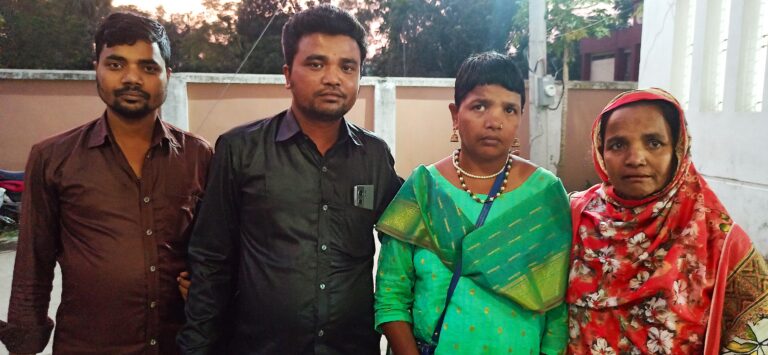
After 12 long years of separation, Shantana, a mentally ill woman from Gaibandha district, Bangladesh, has finally returned home from India. Her repatriation was made possible through the tireless efforts of journalist and humanitarian Shamsul Huda, who has dedicated years to reuniting cross-border missing persons with their families.
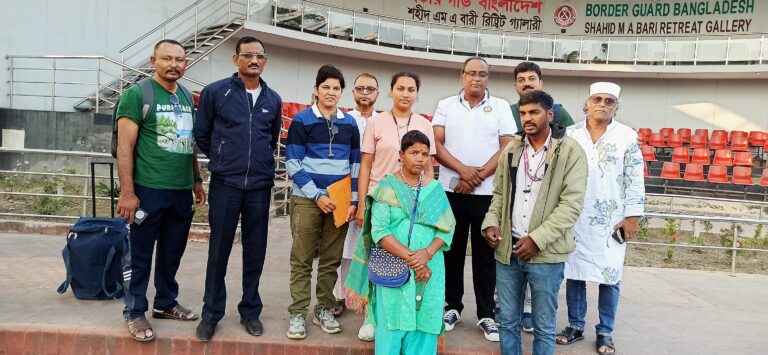
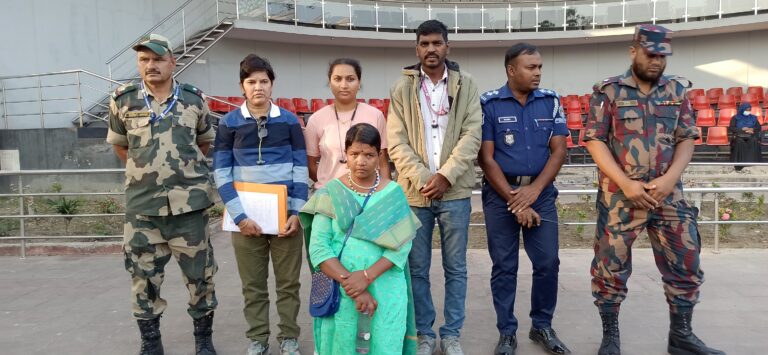
Shantana arrived at the Benapole border on Tuesday morning after being escorted through India’s Petrapole checkpoint. Following immigration formalities, she was handed over to her family in the presence of officials from both countries and representatives of the relevant government departments.
A remembered village became the first clue
Shantana had been living at the Manav Vikas Training and Rehabilitation Centre in India. Her story came to light when Tapan Pradhan, a coordinator with the West Bengal-based NGO Ishwar Sankalpa, contacted Huda in July.
During a phone conversation, Shantana was able to recall her village—Kastipur in Sundarganj Upazila—and the names of family members. Those fragments of memory sparked a search spanning several unions and involving local officials.
- Nearly 12 years missingShantana lived apart from her family while receiving shelter and care in India.
- A call from West BengalTapan Pradhan contacted Shamsul Huda after Shantana remembered details about her home.
- The family was locatedLocal representatives helped identify her father, Abdus Salam Akand, and husband, Sekendar Ali.
- Return through Petrapole–BenapoleCross-border coordination and immigration formalities brought Shantana home.
A search that continued through unrest
Despite internet blackouts and political unrest, Huda continued searching. With help from union chairmen Abdul Jabbar and Mokhlesur Rahman Mondal, Shantana’s father, Abdus Salam Akand, was located. Her husband, Sekendar Ali, was initially hesitant because of financial constraints but was assured that the family would bear no cost for her return.
Shantana’s disappearance had deeply affected her family. After marrying Sekendar in 2014 and having four children, she began showing signs of mental illness. She went missing twice—first being found in Bogura, and later disappearing from a relative’s home near Savar’s Fantasy Kingdom.
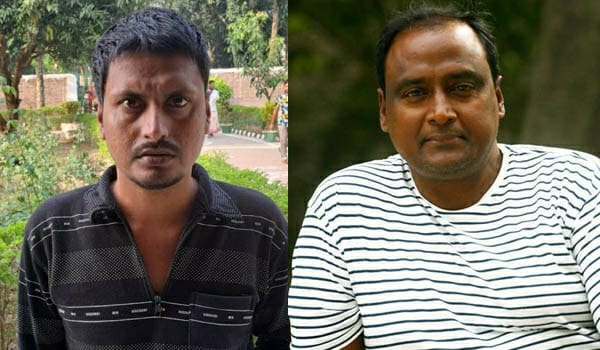
His independent work has helped locate and repatriate missing people who were imprisoned, living in shelters or otherwise separated from their families across borders.
Her journey home is both a celebration of human persistence and a reminder that vulnerable citizens need stronger, dependable institutional support.
One family reunited—and a larger question
Many of the people Huda has traced were imprisoned or housed in shelters; some died before they could return. His work has brought answers and closure to families separated by borders and bureaucracy.
As Shantana embraces her loved ones again, her story raises urgent questions about the role of the state in protecting people affected by mental illness and preventing vulnerable citizens from disappearing beyond national borders. Until systemic support is ensured, individuals and organizations committed to humanitarian service continue to bridge critical gaps.
The journey home
Moments from the cross-border handover and Shantana’s long-awaited return to her family.
With gratitude
Special thanks to Mr. Rajabhau Jodh, Director of the Manav Vikas Training and Rehabilitation Centre, India, and to everyone in Bangladesh and India who helped make Shantana’s safe return possible.